

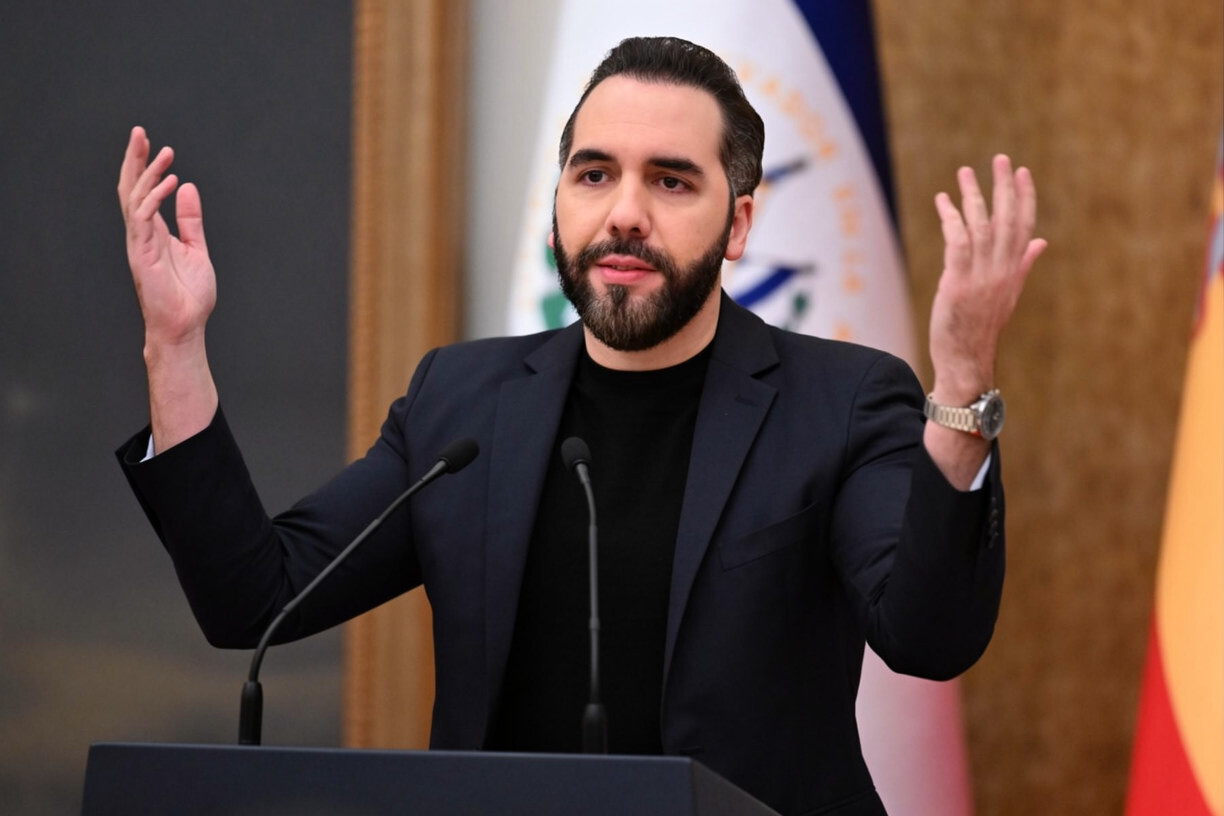
In recent days, we have been incredulously witnessing thousands of Haitians demonstrating in the streets of the capital, provincial cities, and even abroad, cheering Nayib Bukele, the president of El Salvador.
And for good reason, since his decision to deploy soldiers after the disappearance of four Salvadoran aviators from the Gang Suppression Force (FRG) on October 18, the offensive launched to find them has led his troops across the Cul-de-Sac plain, from Croix-des-Bouquets to the city center. This opens the way for the FRG, the Haitian National Police (PNH), and Vectus Global led by Erick Prince, who are achieving successive successful operations against struggling and evidently weakened gangs.
The most notorious leaders remain free, as do those who finance and protect them. Yet, an idea is circulating to propose the Salvadoran head of state for the Nobel Peace Prize.
By awarding Henry Kissinger in 1973 for a peace in Vietnam that was almost immediately swept away by weapons, and by rewarding Barack Obama in 2009 based on mere promises of disarmament that his terms would only fulfill halfway, the Oslo committee is already straying from the line laid out by Alfred Nobel’s testament, which reserves the prize for those who have worked most for fraternity between nations and for the reduction of armies. A military offensive is even more at odds with the spirit of the testament, especially as Bukele himself presents his intervention as a rescue mission and announces the withdrawal of his troops once his aviators are found, even if the Salvadoran Legislative Assembly allows his military to serve within the FRG until October 2027.
Beyond the Nobel debate, do these crowds chanting the name of a foreign leader not reflect the exhaustion, if not the disintegration, of our own institutions?
Forty years of governance choices have patiently built our powerlessness and inexorably deconstructed what was meant to protect us.
Since 1986, the renunciations have piled up. In 1995, the army was demobilized before capable law enforcement forces emerged, leaving stability to successive foreign missions, while armed groups prospered in the shadows of electoral ambitions and cross-border trafficking; the state witnesses impotently, some say complicity, its own insecurity.
Thus, we find ourselves perplexed, wondering whether the PNH or the FAd'H will hold the neighborhoods reclaimed upon the departure of Salvadoran soldiers, and which justice will finally hold accountable the gang leaders, their financiers, and their political godfathers.
The price of peace, our country will earn the day its institutions take on this task themselves and when its elites, across all generations, reclaim what they have taken the unfortunate habit of entrusting to others.
