

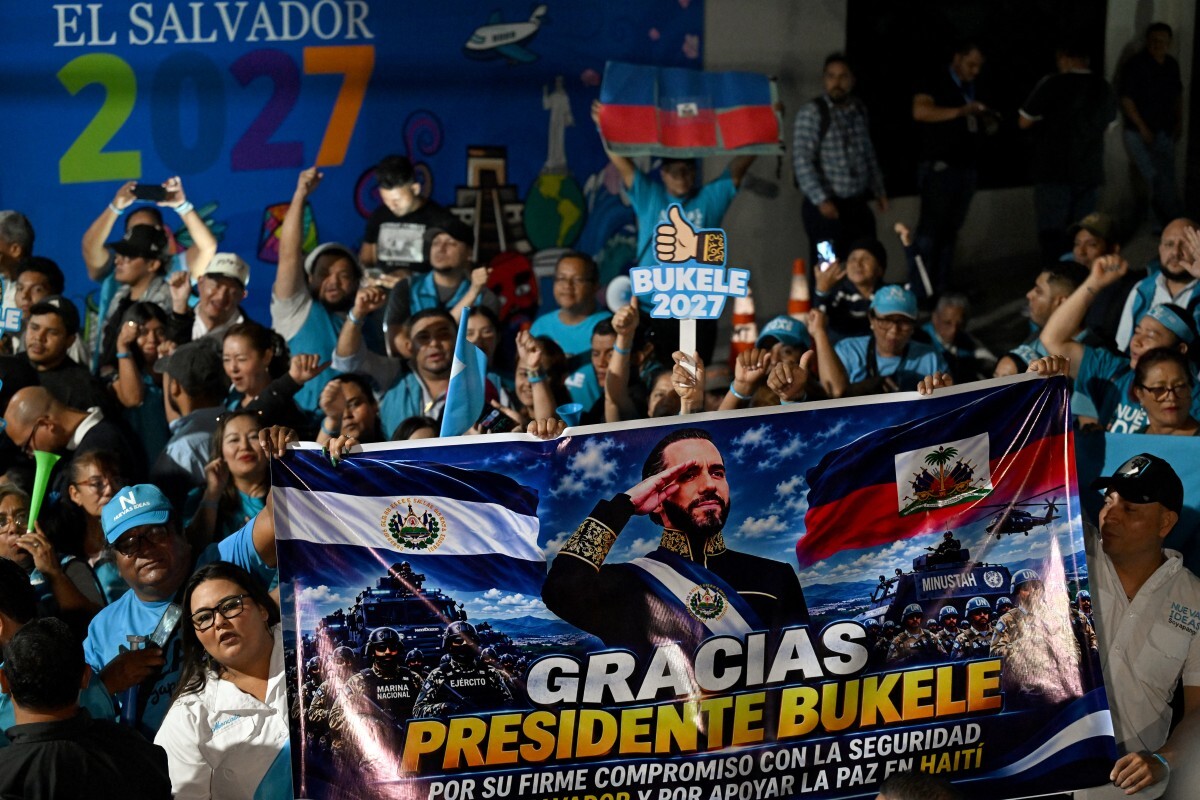
There are historical circumstances where geopolitics ceases to be a mere mechanism of power relations and transforms into a confrontation between the memory of peoples, the demands of international solidarity, and the responsibilities of the present. The deployment, since mid-October, of more than 2,000 Salvadoran soldiers in Haiti, initially motivated by the search for four missing soldiers, then framed within a broader operation aimed at contributing to the dismantling of criminal organizations suffocating Port-au-Prince, belongs to this category of events whose significance considerably exceeds their immediate operational justification.
This sequence raises fundamental questions. It invokes the history of continental solidarities, questions the limits of sovereignty when the State can no longer fulfill its primary function of protection, and highlights the contradictions of an international system whose commitments to Haiti have often been inversely proportional to the results achieved. Thus, the Salvadoran commitment constitutes a multidimensional event: a possible lift from history, a strategic window of opportunity, a political gamble for Nayib Bukele, and above all, a trial of truth for Haitian authorities and the international community. It remains to be seen whether this exceptional conjuncture will produce the conditions for sustainable recovery or whether it will simply add yet another episode to the long chronicle of missed opportunities for Haiti.
From Revolutionary Solidarity to Reciprocity Between Nations
To understand the symbolic significance of the Salvadoran presence in Haiti, it is essential to trace back to the very origins of Latin American solidarities. In 1816, while Simón Bolívar, militarily defeated and forced into exile, found refuge in Haiti, President Alexandre Pétion provided him with crucial political, material, and military support. Port-au-Prince thus became a strategic recomposition space for the South American independence movement. Pétion made available to Bolívar arms, ammunition, ships, financial resources, and fighters. However, his support came with a fundamental political and moral requirement: the commitment to abolish slavery in the territories that would be liberated. This condition was far from accessory. It reflected a deeply universalist conception of freedom, according to which political independence could not claim its full legitimacy as long as a part of the population remained enslaved. Thus, the Haitian revolution was not conceived as an isolated national experience, but as a historical break whose principles were intended to transcend the island’s borders.
The support given to Bolívar contributed to reviving the independence struggle and participated in the dynamics that would lead to the emancipation of several South American territories. This contribution remains one of the most significant, although too often marginalized, chapters in the history of relations between Haiti and Latin America. Two centuries later, the presence of Salvadoran soldiers on Haitian soil gives this memory a particular resonance. It may be historically reductive to establish a mechanical filiation between the aid provided by Pétion and the current commitment of El Salvador. The contexts, motivations, and geopolitical configurations are radically different. However, it would be equally reductive to ignore the symbolic significance of this historical reciprocity. A nation that had contributed, at the cost of considerable sacrifices, to the emancipation of other peoples on the continent now finds itself facing an existential crisis and benefits from the military solidarity of a country from that same region.
History thus seems to remind us of an essential truth: international relations are not built exclusively around immediate interests. They also rest on legacies, moral obligations, ancient solidarities, and a certain conception of responsibility between nations. It is therefore not a matter of presenting El Salvador as the legal debtor of a historical debt towards Haiti. Rather, it is about recognizing the political and moral dimension of a gesture that, beyond its contemporary motivations, reactivates a continental memory that has been neglected for too long.
A Strategic Window of Opportunity and a Awakening of Collective Hope
Beyond its historical dimension, the event presents a particularly important political characteristic: the popular reception of the Salvadoran commitment. After years of violence, forced displacement, institutional paralysis, and daily exposure to the terror of armed groups, a significant portion of the Haitian population seems to welcome the arrival of these foreign forces. The images of foot patrols, spontaneous manifestations of support, and testimonies relayed by the press reflect a political phenomenon that would be unwise to underestimate. A population long abandoned to its manifest feeling of powerlessness expresses, through this welcome, a fundamental demand: to regain security, to move freely, to access essential services, and to live without being subjected to the arbitrariness of criminal organizations.
This popular support constitutes a considerable political resource. It reflects less an unconditional adherence to a foreign leader than a profound distrust towards the national and international institutions that have failed, thus far, to guarantee collective security. However, it is important to correctly interpret this phenomenon. Popular enthusiasm does not constitute an unlimited political mandate nor an early validation of all employed methods. It first expresses an expectation for results. It is up to the Haitian authorities to transform this demand for protection into a genuine project for restoring public authority.
Operationally, the joint operations involving Salvadoran forces, the Haitian National Police, and the Haitian Armed Forces (FAd'H) open interesting perspectives. The recapture of strategic positions, particularly around the Sylvio-Cator stadium, represents an issue that exceeds mere territorial dimensions. These spaces constitute potential support points for the projection of forces, securing circulation routes, and preparing for future operations. However, regaining territory and controlling it sustainably are two distinct military realities. The experience of counterinsurgency operations demonstrates that territorial reconquest produces lasting effects only when accompanied by permanent institutional presence, effective intelligence mechanisms, the ability to secure populations, and a progressive return of public services. It is precisely at this level that the main Haitian challenge lies.
The Haitian Armed Forces, whose numbers remain limited in relation to security needs, do not yet have all the human, logistical, technological, and operational capabilities necessary to independently consolidate all reclaimed territories. The national police, for its part, must continue its institutional transformation and strengthen its projection, intelligence, and law enforcement capabilities. The current moment therefore demands an approach that articulates three imperatives: neutralizing the operational capabilities of armed groups, sustainably restoring state territorial control, and restoring public trust in public institutions. The window of opportunity is real, but it remains fragile. Foreign forces will not remain indefinitely. The true success of this cooperation will thus not be measured by the number of positions regained during their presence but by the capacity of Haitian institutions to maintain them after their departure. The issue is not to buy time. It is to convert the time gained into national capabilities.
The Gamble of Bukele: Between Political Credibility and Historical Ambition
The commitment of President Nayib Bukele in Haiti also deserves a reading that goes beyond immediate humanitarian and security considerations. By deciding to mobilize Salvadoran military resources in an external theater of operations, Bukele engages part of his political and diplomatic capital. He exposes his government to legitimate questions regarding the costs of the operation, its real objectives, its legal framework, and the expected results. The initial justification, centered on the search for four missing soldiers, has gradually evolved into a much broader ambition: contributing to the fight against criminal organizations and enabling Haitians to regain control of their territory. This evolution reflects a shift in political scale.
The Salvadoran president no longer merely projects an image of a leader who has achieved spectacular results in the fight against gangs in his own country to the outside world. He is also seeking to position El Salvador as a regional actor with an initiative capability in continental security matters. This ambition presents obvious diplomatic advantages. It enhances El Salvador's international visibility, consolidates Bukele's personal positioning, and allows him to present his experience as a reference in the international debate on new forms of organized crime. However, it also carries considerable risks. The Salvadoran experience cannot be mechanically transposed to the Haitian context. Criminal structures, territorial configurations, relationships between economic and political actors, institutional capacities, and historical dynamics differ profoundly. Haiti must thus benefit from Salvadoran operational experience without renouncing its own constitutional and democratic requirements.
There exists, however, a particularly strong symbolic dimension to this initiative. By committing to Haiti, Bukele invests in a political narrative that presents him as a leader capable of transcending national borders to contribute to the resolution of a major regional crisis. The parallel with Simón Bolívar may feed the political imagination, but it is important not to confuse the two trajectories. Bolívar carried a project of national and continental emancipation. Bukele's action is inscribed within a contemporary strategy of security and power projection. The rapprochement is thus more symbolic than historical.
Nonetheless, one reality remains: the failure of this initiative would significantly impact the international credibility of the Salvadoran president. Its success would, conversely, enhance his status as an essential player in regional security debates. For Haiti, this situation represents a diplomatic lever that would be unwise not to take advantage of. The interests of El Salvador and Haiti are not necessarily identical, but they can converge around an immediate objective: the neutralization of criminal organizations and the restoration of state authority. The responsibility of Haitian leaders is precisely to transform this circumstantial convergence into a structured, transparent partnership that respects national sovereignty.
The Ultimate Test for the International Community
It would be difficult to analyze the Salvadoran initiative without revisiting the particularly worrying record of the international community in Haiti. For several decades, the country has been the theater of successive international interventions, stabilization programs, peacekeeping missions, institutional strengthening initiatives, and international conferences whose financial and political commitments have rarely produced the announced structural transformations. The United Nations has devoted considerable resources to Haiti. Several missions have recorded achievements in specific areas. It would be excessive to reduce the totality of their action to an absolute failure. However, it remains indisputable that these interventions have not built the necessary institutional conditions for lasting stability. The current security situation constitutes, in this regard, a particularly severe observation.
A multinational security force whose deployment was supposed to reach substantial numbers has long suffered from delays, logistical deficits, financial constraints, and insufficient international mobilization. Meanwhile, criminal organizations have consolidated their positions, developed their coordination capacities, and expanded their grip on strategic territories. This disproportion between the stated ambitions and the means effectively mobilized has progressively eroded the credibility of international action. The Haitian problem thus does not reside solely in the insufficiency of available resources. It also lies in the fragmentation of strategies, the absence of political continuity, the weakness of accountability mechanisms, and a persistent tendency to address symptoms without sufficiently tackling the structural causes of the crisis.
The Salvadoran initiative intervenes in this context. It does not necessarily constitute a model of multilateralism. Its operational framework, coordination mechanisms, and the legal guarantees surrounding its intervention must be subject to rigorous attention. However, it introduces a new dynamic into a configuration where international commitments have too often been paralyzed by political hesitations and operational shortcomings. The international community thus faces an unavoidable responsibility. It must transcend the posture of a mere critical observer, provide the necessary resources, support the coordination of engaged forces, and contribute to the establishment of a sustainable stabilization mechanism. It must also ensure respect for fundamental rights, the protection of civilians, and the existence of independent control and accountability mechanisms. Above all, it must understand that a military victory, even significant, cannot alone constitute a solution to the Haitian crisis.
Security must be accompanied by a restoration of justice, a reconstruction of administrative authority, an economic revival, and a process of institutional reconciliation. Without these complementary dimensions, the reclaimed territories risk becoming spaces of vulnerability and contestation once again. The true test for the international community thus does not consist in demonstrating its capacity to deploy soldiers. It consists in proving that it possesses the political will, strategic coherence, and perseverance necessary to accompany a State towards the restoration of its sovereign functions.
The True Challenge: Initiate Haitian Institutional Renaissance
Beyond historical, military, and diplomatic considerations, an essential question must now dominate the national debate: what will Haiti do with this opportunity? It would be particularly concerning if Haitian authorities were to be satisfied with the presence of foreign forces without simultaneously engaging in a profound reform of their own security apparatus. International assistance must be seen as an accelerator of national capacities, never as a permanent substitute for the State. This notably requires defining a coherent security architecture, based on a functional articulation between the National Police, the Haitian Armed Forces, intelligence services, and judicial institutions. The fight against gangs now demands an integrated approach that goes beyond sporadic repressive operations and takes into account the territorial, financial, logistical, political, and transnational dimensions of organized crime.
It also requires an unequivocal political will to tackle funding networks, arms supply circuits, institutional complicities, and the protection mechanisms that certain criminal organizations benefit from. No security strategy can produce sustainable outcomes if it is limited to armed executants while leaving intact the economic and political networks that fuel their power. Simultaneously, the country must invest in the professionalization of its security forces, the modernization of its intelligence capabilities, the training of its personnel, the improvement of its operational infrastructures, and the establishment of effective democratic control mechanisms.
A fundamental political truth must also be reestablished: the restoration of security makes sense only if it allows citizens to regain their rights, dignity, and freedom. Territorial reconquest must pave the way for the return of schools, hospitals, administrations, economic activities, and public services. It must enable displaced populations to return to their neighborhoods under acceptable security conditions. Above all, it must restore the bond of trust between the State and its citizens. It is under this condition that a security victory can become a national victory.
History Opens a Door, Haiti Must Have the Courage to Step Through
The engagement of El Salvador in Haiti has a significance that goes beyond the immediate contingencies of a military operation. It reactivates a continental memory, introduces a new diplomatic dynamic, and offers a deeply hurt country an additional possibility to break free from the security impasse. However, it would be illusory to believe that Haiti's salvation will come from outside. International solidarity can provide means, skills, operational support, and diplomatic space. It cannot produce, on behalf of Haitians, the political will, institutional cohesion, and collective determination necessary for the rebuilding of their country.
Two centuries after Alexandre Pétion provided his support to Simón Bolívar in the name of an ideal of freedom that transcended national borders, Haiti finds itself in a singular historical situation. The country that contributed to the emancipation of other peoples on the continent today receives the support of one of them in an attempt to free itself from its own chains. This reciprocity has undeniable symbolic strength. But its true significance will not reveal itself in ceremonies, political statements, or images of foreign soldiers parading in the streets of Port-au-Prince. It will be measured by Haiti's capacity to regain its effective sovereignty, rebuild its institutions, and guarantee its citizens the basic conditions for a free and dignified existence.
It would thus be erroneous to consider this sequence as a new demonstration of Haitian incapacity. It should rather be interpreted as a pressing invitation to break with the political, institutional, and economic mechanisms that have made the current collapse possible. Optimism, in such circumstances, does not stem from naivety or a communication exercise. It stems from a political conviction: no national crisis, no matter how deep, can definitively condemn a people when it has the will to rebuild its institutions and take its destiny into its own hands. El Salvador has opened a window of opportunity. The international community is called upon to give it lasting significance. But the historical responsibility for transforming this conjuncture into a true national turning point lies first and foremost with Haitian leaders and citizens.
The true lift from history would not simply be to receive today the aid of neighboring peoples to whom Haiti once extended a hand. It would be to regain, thanks to this solidarity, the capacity to become again an actor of stability, freedom, and cooperation in the region tomorrow. Today, on the eve of November 18, when we commemorate the Battle of Vertières, Haiti is not destined to remain indefinitely the object of the strategies of other nations. It must regain the role of subject of its own history. And this time, the opportunity to demonstrate it is perhaps within reach.
