

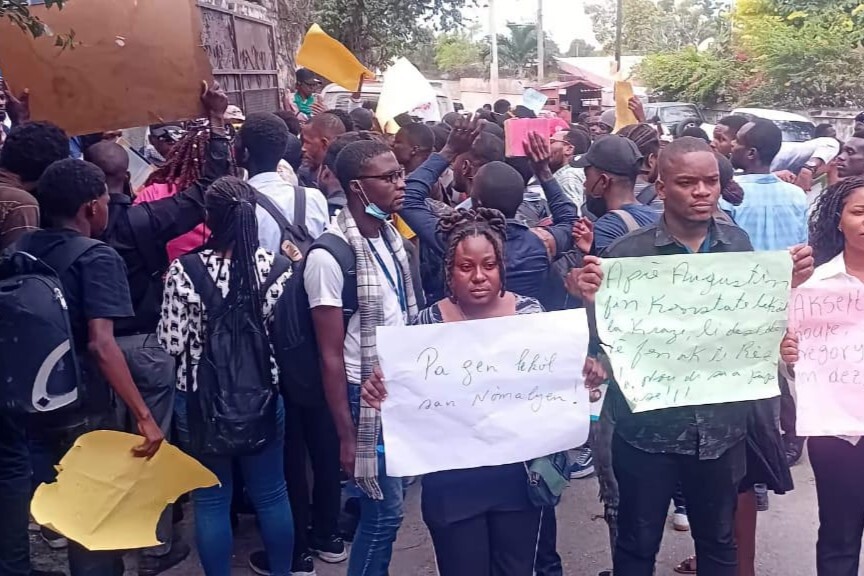
Four months after the end of their internships in national high schools across the country, students from the École normale supérieure (ENS) still face the refusal of the Ministry of National Education to pay them. Even more seriously, the administration declines the obligation to honor the agreement made on May 22, 2013, which stipulates their professional integration at the end of this training period.
The Ministry of National Education and Vocational Training (MENFP) is currently at the center of a heated controversy over the treatment of the 292 interns from the École normale supérieure (ENS) who completed their final internships from May to July. While these students fully dedicated themselves to the classrooms, according to committee members, all required documents have already been submitted to the MENFP, including internship reports and certificates confirming the successful completion of the internships. Nevertheless, the concerned students claim to still be awaiting a final decision from the ministry.
Following several meetings at the ministry, on Wednesday, November 4, a group of interns demonstrated in the streets to demand that the Minister of Education respect the commitments made during the meeting held at the Montana hotel. It is worth noting that this is not the first time that ENS graduates have raised this issue. This situation recalls the tragic disappearance of former intern Grégory Saint-Hilaire, who was shot within the institution on the evening of Friday, October 2, 2020, while demanding his compensation and appointment, which were owed to him by the ministry following his internship.
For the 292 concerned, this feeling of abandonment is compounded by a profound social injustice. Working without pay, without the guarantee of a salary to cover the costs related to the end of their studies, resembles a form of institutional contempt. What was supposed to be a transitional step towards active life has turned into a fight for dignity and the recognition of work that was carried out with rigor.
