

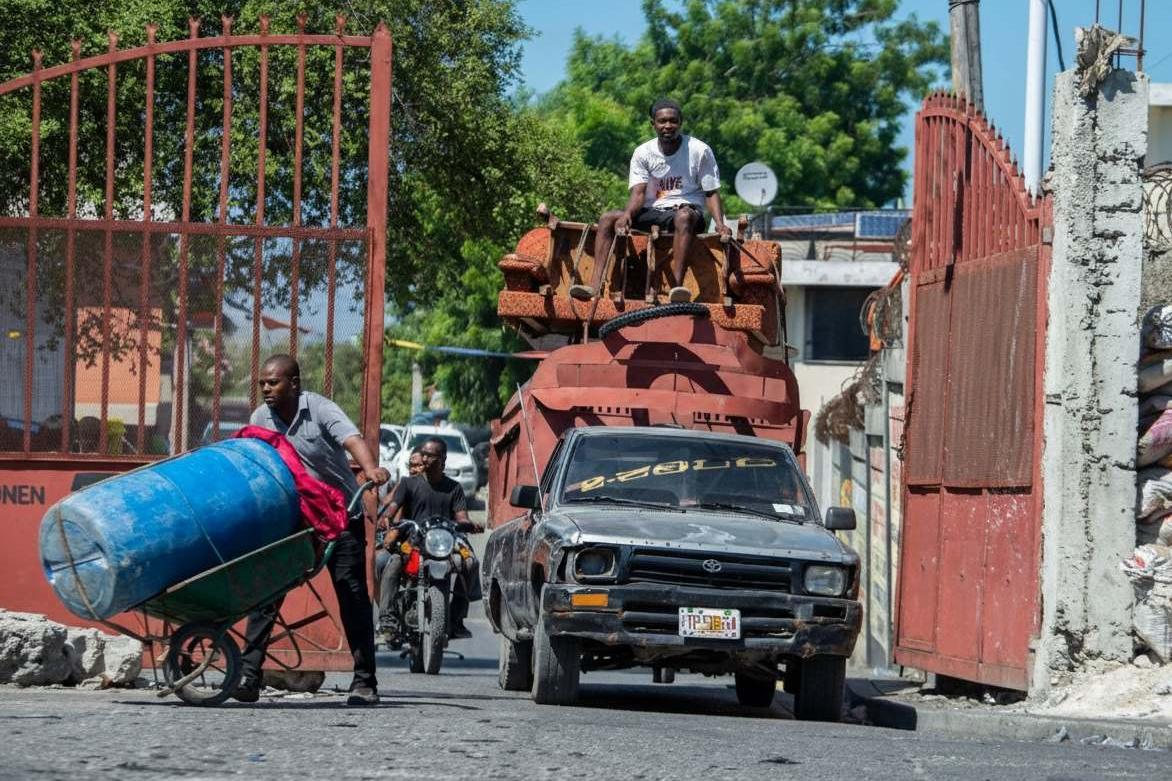
A people that becomes accustomed to suffering eventually takes the unacceptable for granted as a fatality.
In Paris and in several cities in France, citizens are taking to the streets to demand better living conditions, even within a great democracy often held up as a model.
Thus, one question arises: and we, in Haiti, why do we not demand with the same determination our right to a dignified life?
This is not about blindly copying what is done elsewhere. It is about understanding that no progress arises from collective resignation.
Yet, in the face of growing misery, widespread insecurity, the degradation of public services, and the collapse of our living conditions, a heavy silence prevails.
Why this passivity? When will a true citizen consciousness arise?
Are we condemned to live under inhumane conditions? Will we indefinitely tolerate this economic crime and bloody violence that, due to their organized and structured nature, create the feeling of a suffering perpetuated at the expense of the population?
Can we hope for change without a collective awakening, without firm citizen demands, and without accountability from those in power?
Surely, fear, precariousness, and disillusionment partly explain this silence. But they should not become the foundation of a permanent resignation. A people that gives up claiming its rights leaves the field clear for those who take advantage of its powerlessness. Silence has never healed suffering, and resignation is not a societal project.
It is therefore urgent to awaken our national consciousness and to move beyond our divisions. Human dignity, security, social justice, and access to essential services are neither privileges nor favors: they are legitimate demands that any responsible governance must meet.
Shame on us if we continue to normalize the unacceptable! But beyond the indignation, it is up to us to transform:
our anger into civic engagement,
our despair into collective will,
our silence into peaceful, firm, and responsible demands.
Let us finally cultivate the ideal of Jean-Jacques Dessalines, not as a mere historical heritage, but as a demand for dignity, freedom, sovereignty, and social justice. Haiti will not emerge from misery through speeches, promises, or inaction, but through a collective will to break with the practices that entrench it.
Haiti deserves better. The Haitian people deserve better. And change also begins with our ability to mobilize and demand accountability.
