

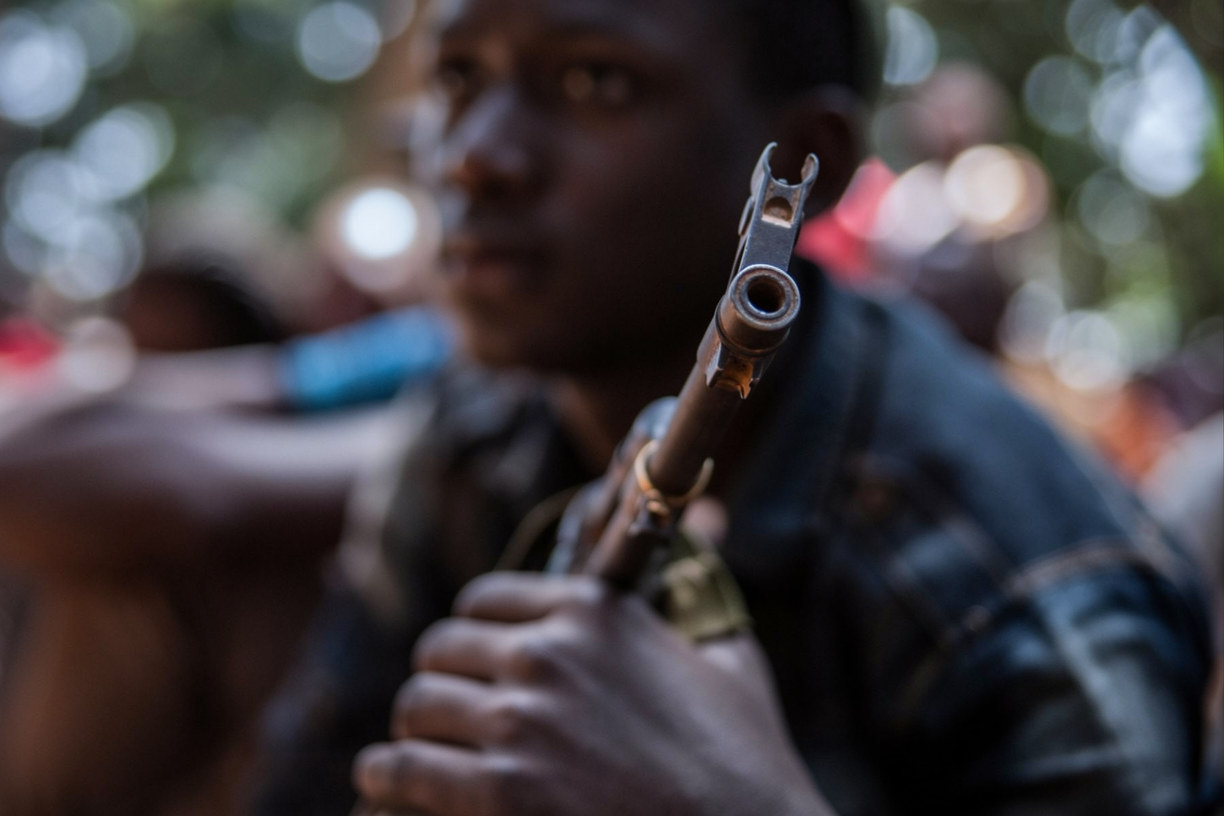
One wonders. Why does a young person from Cité Soleil, Martissant, or Bel-Air join a gang? The question implies that they had a range of futures to choose from and opted for the worst. I argue the opposite. For many young people from working-class neighborhoods, becoming a gang member is the most rational choice, as survival may demand it and all other avenues are fraught with barriers. The path seems predetermined. I speak of a rationality under constraint, and I am primarily thinking of teenagers and young adults. For younger children, the word choice no longer applies.
According to the United Nations (UN), recruitment and use of children nearly tripled in 2025, with children making up between 30 and 50% of gang members. That year alone, it confirmed the recruitment of at least 892 children. The report from the Integrated Office of the United Nations in Haiti and the Office of the High Commissioner for Human Rights, published on February 20, 2026, establishes that most of the 26 active gangs in Haiti are involved in child trafficking. It cites causes such as poverty, weak institutions, and social exclusion. As the phenomenon reaches this magnitude, individual perversion no longer explains anything. A structural cause must be sought.
The trend among a student generation here is to refer to Axel Honneth or to be inspired by him, intelligently or not. From this, they have forged a concept of social revenge that I myself repeated a few years ago. The gang member would appropriate a fictitious dignity by claiming others' goods, lifestyles, the attributes they display on social media to gain recognition. Yet what does Honneth say? In The Struggle for Recognition, he states that identity is constructed in three spheres: love, rights, and social esteem. Contempt destroys self-confidence, and revolt would arise from this moral injury. Honneth does not say that gangs chase after goods. It is the common reading that says so, and it is that reading that I contest. His thesis also presupposes a society capable of hearing and responding to the demand. It overlooks the case where the primary urgency is staying alive. Nancy Fraser had already objected to Honneth that recognition cannot be separated from redistribution.
Let’s start with territory. Gangs control about 90% of Port-au-Prince. In a neighborhood controlled by a gang, not belonging means being at its mercy. The gang offers what official society refuses: a meal, a weapon, protection, a rank, a name. It also pays, from 30 dollars a week to several hundred per month according to the latest UN report on the situation, in a country where one can earn nothing. It even provides the recognition that Honneth places at the center of everything, but as a bonus, after survival and not in its place.
When family does not exist, or parental responsibility is not assumed, that is where one finds a home. Young gang members often say, “... this gang is my family ...”. The gang leaders are their dads. It is not without reason that they call them that. Make an effort to listen to their words on social media. One might say that this is the first sphere of Honneth, love. Fair enough. But it then takes precedence over any demand for respect, and it plays out where survival is at stake. This situation resembles less a civic debate than Hobbes's state of nature, where everyone fears for their life and turns to the group that promises protection.
Next comes the closure of other pathways. It takes two forms. For some, school no longer exists. According to the United Nations Children's Fund, gangs destroyed 47 schools in Port-au-Prince in January 2025 in just one month, after 284 schools were destroyed in 2024. One in seven children is out of school. Those do not reach the job market. For others, who have studied and are applying, filters operate.
They start with the address. Just saying you come from Cité Soleil or Martissant is enough to trigger suspicion before any words are spoken. It continues with attire, accent (the Cap-Haïtien accent can exclude, and not having one offers little protection), social circles, and family connections. The names of parents, their network, the school attended, the university graduated from complete the sorting. These are markers of social difference, of class.
I take the example of the thousands of young people who submit their applications for supposedly vacant positions. Their yellow envelopes contain the diploma, the CV, the cover letter, everything the candidate believes makes their value. Yet, they also carry, even before being opened, the address, first name, last name, and these refer back to markers of class read before the content. The Bwadife, the Syphilus, the Ronaldo, the Dieusibon. Too peasant, too African, too football-like, too biblical, they are looked down upon. Those who have neither recommendation nor mentor discover that the most polished application does not exempt them from needing a network. The higher one climbs in the pyramid, the tighter the filters become, and at the top, one mostly encounters heirs. The Church, which preaches equality before God, reproduces the hierarchies of the outside world within its pews. The media only shows the working-class neighborhood when it is burning, and they freeze an image that the young person eventually recognizes as the only available one.
This contempt is real, but I do not consider it the primary cause. It aggravates. It closes off avenues while territory and hunger push towards the gang.
Stated this way, the calculation is coherent, which is more alarming than if it were irrational. On one side, years of study with no certainty of outcome, with the assurance of being poorly judged. On the other, immediate belonging to a group that provides income, protection, and visible status. But this coherence only holds for the short term. The gang consumes its own members, and the young person who joins buys present enjoyment with their future. Not all young people from these neighborhoods succumb to this, far from it. I believe those who tip over are those whom family does not retain, whom school has abandoned, and whom the gang from their street solicits.
Let me be clear, explaining does not absolve. The gang first destroys those who have not chosen anything. Gang leaders and the networks that organize child trafficking bear full responsibility, which nothing in the previous statements mitigates. Recognizing the rationality of membership does not make it just or acceptable. Instead of asking why these young people have become violent, let us ask what school, church, labor market, media, and state have offered them instead. As long as these doors remain guarded by filters, social difference markers, and protection is found elsewhere than in the state, the gang will not even need to seduce. It will be enough to wait until we have finished closing the door on those who knock on it.
