

What is so difficult to understand?
Under the French colony of Saint-Domingue, agriculture provided a powerful boost to the plantation economy, or rather to the emerging capitalist economy. The massive production of agricultural goods and colonial commodities constituted, over time, the economic prosperity of the French colonial Empire through the growth of its foreign trade on the scale of the European continent. This conquered island was endowed with agricultural virtues, the fertility of its soils being acknowledged and recognized by farmers and cultivators of the time. Saint-Domingue had an abundant and oversized labor force: 500,000 slaves produced non-stop. The colonists automatically exempted themselves from wage costs and also evaded taxes from the metropolis, because they condemned the slaves to live far below their life expectancy. In Saint-Domingue, the policy of the French colonists was dictated by violence and cruelty, driven by the lure of easy profit from opportunists; many of them dreamed of quickly joining the French bourgeoisie. Under the yoke of masters and colonists, the slave was not to procreate, nor to age, eventually dying at the age of 38 or 40 at most under the weight of fatigue, exhaustion, and starvation. In addition to repeated vexations and humiliations, the Haitian slave experienced a double death: the physical death of extreme painful suffering, and moral death. Such were the draconian measures of the French slaveholders, under whose constraint our Ancestors agonized until their last moments.
Before continuing with our presentation, we want to open a parenthesis to say this: Our history as a free people is very poorly explained by our early national authors Thomas Madiou and Beaubrun Ardouin, who display a selective memory in their appreciation of events as well as in the choice of historical sources; they rise against Jean-Jacques Dessalines, the main architect of Independence, and intentionally introduce the ideology of color into Haitian literature. It should be noted that the question of color was prohibited by the Constitution of May 20, 1805, in its Article 14. And it is this ideological legend (class colorism) that is responsible for our bitter misfortunes and delays in many areas of national life, particularly in terms of intellectual intelligence. Our people in the bourgeois sphere pay no attention to the incriminations and fabrications leveled against Dessalines, which they consider as insignificant peccadilloes. These individuals are solely concerned with their class interests, as if Dessalines were not a cause to support or to justify. And we close the parenthesis.
We wanted to say that the people of slaves in Saint-Domingue were the backbone of the evolution of capitalism, which was in a state of stagnation before the colonization of the New World, now known as America. Today, the capitalist economy dominates on a global scale, with Western States, the spearhead of international imperialism, being the privileged beneficiaries: it is fair to say "To each his due." Karl Marx sheds light on the opportunity of the enslavement of Blacks, which provided a strong and powerful material impulse to the previously stumbling capitalist economy. Here is what he was able to observe in his historical studies: "Before the slave trade, the colonies provided the Old World with a few products without changing the world in practice. Slavery is thus an economic category of the highest importance. The discovery of gold and silver-bearing regions in America, the enslavement of natives, their entrapment in mines or their extermination, the beginnings of conquest and plunder in the East Indies, the transformation of Africa into a sort of commercial warren for black skin hunting, are the idyllic processes of primitive accumulation that signal the dawn of the capitalist era. Immediately afterwards, mercantile war breaks out; it has the whole globe as its stage." Karl Marx: Capital (Ed. 1872) – Genesis of industrial capitalism. Chapter 31, page 336.
Advantages and positive consequences of agricultural development in Haiti – Maximum absorption of unemployment up to full employment. This is a focal point on which our ruling elites have not worked enough; it requires calm and sovereign reflection. In one of his enlightening broadcasts on SIGNAL FM radio, Professor Michel Soukar once said that Haiti possesses a kindergarten, or preschool, his metaphor alluding to the active population of the national country. Personally, your faithful servant listened to the show, which dates back over two decades; but his very representative remarks unfortunately remain without effect because our ruling classes no longer care about the country and state affairs and are drowning in the mire of conjunctural crises that weaken the national economy. Meanwhile, the active population is growing at the pace of the national demographics, while the job market shrinks within its extreme limits. Today, the total population of Haiti is estimated to be over 11 million people, of which over half are of working age. However, in terms of increasing poverty and precariousness, statistical data matter very little to the government of the Republic, which finds itself paralyzed due to its wait-and-see attitude and indecision. The dominant elite imagines that a hypothetical miracle would occur, as its members profess the Christian faith or belief in the Triune God.
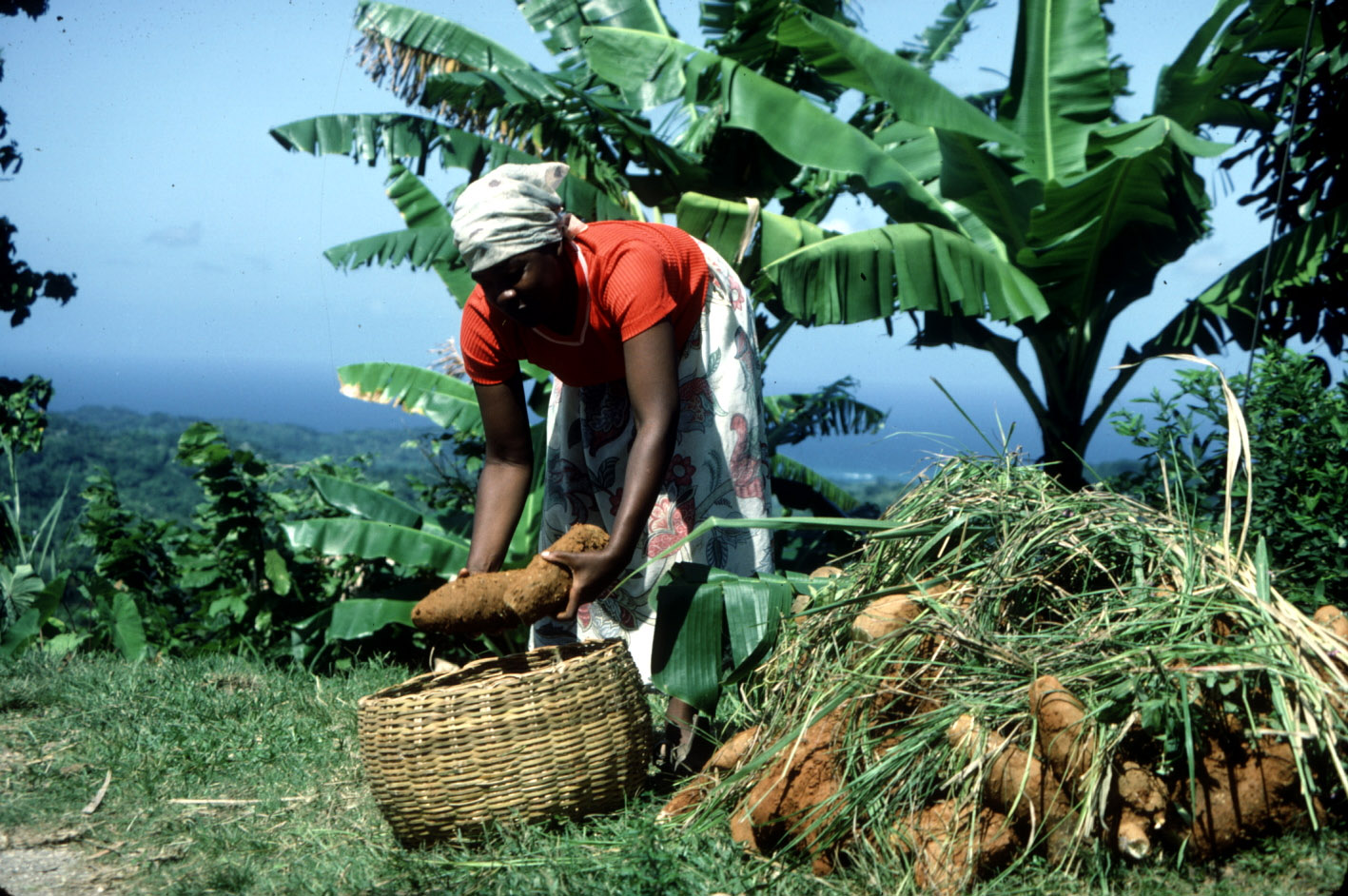
Work is, in our opinion, the alphabet of human activities; work is intimately linked to emancipation and continuous progress. The government of the Republic must always obtain a variety of market statistics; it has an internal market estimated at about 11 million consumers committed to the country's agricultural production, and any possible surpluses should be used for export in the context of balancing the trade balance. As can be observed, there is nothing that cannot be understood; likewise, there is no better perspective than to explore the agricultural virtues and potentials of Haiti and to showcase our traditional crops. So Ladies and Gentlemen who are in charge: Open up projects for agriculture, livestock, and fishing; provide work for the working people, and you will achieve medium and long-term economic and social development over time. With the money earned from their labor, the working-class population – including both rural and urban proletariat – would be in a position to improve their material living conditions, starting by transforming their habitat made of old hamlets and slums, which they would ultimately turn into true modern villages. At least, it would sustainably change the physical appearance of the regions, departments, and localities, if the state chose to release productive forces and mobilize them around sustainable agriculture.
Still in that same vein, Ladies and Gentlemen: you will provide road infrastructure to facilitate the movement of agricultural products and livestock to the designated markets; drinking and domestic water for the population, including health centers. You will also amortize and/or lower, occasionally, the cost of taxes and duties for local populations, within the framework of this new beginning. Call on the responsibilities of people who know Haiti, because it is indeed difficult to progress and prosper in an environment whose social, cultural, intellectual, artistic, political, and economic structures one does not master. This is necessary to better orient oneself to avoid unfortunate conflicts of interest that may arise suddenly. Also consider establishing poly-agricultural centers with national coverage; because, from our point of view, every Haitian man and woman should know the principles of agriculture, the good cultivable lands, and the produce that come from them. Such is our vision of the Haitian agricultural landscape, which we believe can energize our national economy that has stagnated for many decades of abandonment and despair. We have said.
