

(For a partnership based on sovereignty, foresight, and shared development)
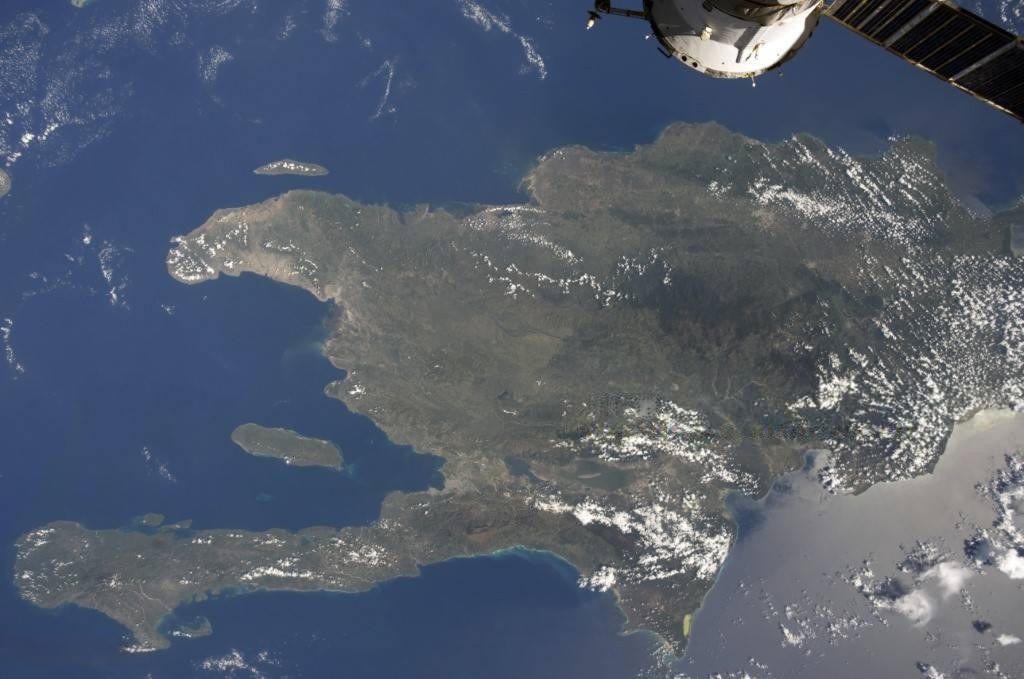
The call made by Dominican businessman Fernando Capellán for the development of strategic plans aimed at organizing relations between the Dominican Republic and the Republic of Haiti deserves to be welcomed with attention and examined constructively. Beyond its economic dimension, this proposal raises a fundamental question: how can two states sharing the same island sustainably organize their relations, prevent recurring crises, and identify development opportunities compatible with their respective national interests? This question is all the more important as the relations between the two countries are not limited to political disputes or commercial exchanges. They also concern border security, population movements, employment, health, the environment, the management of natural resources, infrastructure, transportation, and the living conditions of communities on both sides of the border. Geographic proximity is a permanent reality; strategic cooperation, on the other hand, is a political and institutional construction that must be organized. The aim is not to suggest that the two countries share the same interests under all circumstances. Rather, it is to recognize that their interests, sometimes converging and sometimes diverging, require predictable mechanisms for dialogue, negotiation, and coordination. Fernando Capellán's call thus opens a space for reflection that Haiti would do well to invest in methodically. The response should not be an automatic endorsement of all the proposals put forward, nor a rejection based solely on historical mistrust. It should consist of transforming this openness into a structured institutional proposal, respectful of the sovereignty of both states and oriented towards concrete results.
I. WHY A BINATIONAL RELATIONSHIP CAN NO LONGER REST SOLELY ON CRISIS MANAGEMENT
A relationship between two neighboring countries cannot be sustainably managed through a succession of ad hoc reactions to events. When decisions are primarily made under the pressure of a crisis, a media controversy, or a political emergency, governments have less time to consider their medium- and long-term consequences. Emergency management remains necessary. However, it cannot replace strategic planning. A binational relationship requires a permanent capacity to distinguish three complementary dimensions:
a. operational management, which addresses immediate problems;
b. strategic coordination, which organizes decisions and commitments for the medium term;
c. foresight, which examines possible developments and prepares both states for the risks and opportunities of tomorrow.
This distinction is essential. A border dispute, a disruption of exchanges, or a migratory tension may require immediate intervention. But their sustainable management also assumes rules of communication, consultation procedures, reliable data, and mechanisms to anticipate the consequences of decisions made. True progress would, therefore, consist of moving from a relationship dominated by a succession of tensions to one with institutional mechanisms capable of preventing, containing, and, when they occur, resolving them in accordance with applicable law.
II. WELCOMING THE CALL FOR A STRATEGIC PLAN WITHOUT CONFUSING COOPERATION AND RENUNCIATION OF SOVEREIGNTY
Cooperation between the Republic of Haiti and the Dominican Republic should not be seen as a process in which one state defines the priorities of the other. It must be based on mutual recognition of their sovereignty, legal equality, institutions, and responsibilities towards their respective populations. Sovereignty does not mean the absence of cooperation. It particularly means the ability to determine one's interests, participate in negotiating common rules, evaluate proposals made, and decide with full knowledge of the facts. For Haiti, this requirement involves preparing its positions based on verifiable national data, rigorous economic and legal analyses, consultations with relevant stakeholders, and a clear understanding of the consequences of envisioned commitments. For the Dominican Republic, it also implies that the search for economic outlets and regional stability must be framed within a context of bilateral dialogue, respect for fundamental rights, and shared responsibility. Balanced cooperation does not require both states to have the same capacities or the same priorities; it requires that they can defend their interests within a predictable and mutually respectful negotiation framework. The goal is therefore not to construct economic integration at any cost. It is to seek forms of cooperation whose benefits, costs, risks, and responsibilities can be identified, discussed, and evaluated.
III. PROPOSING A BINATIONAL STRATEGIC PLAN FOR DEVELOPMENT AND COOPERATION
In a positive response to Fernando Capellán's call, it would be pertinent to propose the development of a Binational Strategic Plan for Development and Cooperation between the Republic of Haiti and the Dominican Republic, built around a long-term vision and broken down into operational programs that are periodically evaluated. This plan should not be a simple declarative document. It should define specific objectives, institutional responsibilities, timelines, expected resources, outcome indicators, and revision mechanisms. It could be organized around seven priority axes.
1. Political dialogue and crisis prevention
Both states could establish a permanent mechanism for strategic consultation charged with identifying emerging disputes, organizing necessary consultations, and promoting the search for negotiated solutions. This mechanism should provide for official communication channels, consultation procedures in times of crisis, and regular meetings between the relevant administrations.
2. Trade, investment, and job creation
Economic cooperation should aim to increase employment opportunities, improve production conditions, and promote investments compatible with national legislations. It should notably examine cross-border value chains, local product transformation, logistics infrastructure, market access conditions, and opportunities for the development of small and medium-sized enterprises. Any initiative should be assessed based on verifiable results: jobs created, local added value, investments made, skills transferred, and effects on the populations’ incomes.
3. Border management and territorial development
The border should not be viewed solely as a space for control. It is also a living territory, one of economic exchanges and movement of people. This implies reconciling legitimate security and control imperatives with the needs of border populations, the regularity of legitimate exchanges, and access to essential services. Concerted programs could focus on infrastructure, border markets, transportation, sanitation, and risk prevention.
4. Migration, fundamental rights, and administrative cooperation
Migration issues necessitate understandable rules, predictable procedures, and cooperation among the competent authorities. The binational plan should promote the exchange of legally authorized information, improvement of administrative procedures, prevention of human trafficking, and respect for fundamental rights. Cooperation in this area should neither trivialize rights violations nor ignore the accountability of states in control.
5. Environment, water, and natural risks
Environmental risks do not stop at political borders. The management of watersheds, protection of ecosystems, erosion, flooding, and the consequences of climate change call for coordination based on scientific knowledge. Joint programs could improve warning systems, share relevant environmental data, and enhance capacities for disaster prevention and response.
6. Health, education, and scientific cooperation
Public health, university research, and vocational training are areas where targeted cooperation can produce lasting human benefits. Partnerships between universities, research centers, and health institutions could contribute to the training of professionals, research on cross-border issues, and improvement of epidemiological surveillance, respecting data protection rules. Scientific cooperation should also facilitate the production of knowledge on border economies, human mobilities, territorial inequalities, and possibilities for shared development.
7. Culture, sports, and dialogue between societies
Relations between the two countries should not be left solely to governments or economic actors. Universities, cultural organizations, professional associations, local governments, media, and youth organizations can help reduce misunderstandings and foster a better mutual understanding. This is not about erasing historical differences but enabling societies to approach them with greater knowledge, discernment, and responsibility.
IV. INSTITUTIONALIZING FORESIGHT: MOVING FROM INTENTIONS TO DECISIONS
A binational strategic plan cannot operate sustainably without an appropriate institutional architecture. It would therefore be useful for both governments to consider creating a Binational Council for Strategy, Foresight, and Cooperation, or an equivalent mechanism tailored to the legal and diplomatic frameworks of both countries. This structure could periodically gather representatives designated by the governments, sectoral administrations, and, depending on the topics discussed, experts, researchers, and representatives of the relevant sectors. Its main functions would be as follows:
a. produce a shared diagnosis of binational issues;
b. identify risks and opportunities for cooperation;
c. propose medium- and long-term evolution scenarios;
d. prepare recommendations for both governments;
e. monitor the implementation of approved commitments;
f. publish periodic assessments of the results achieved.
The creation of such a mechanism should not lead to a proliferation of bureaucratic structures. It should rely as much as possible on existing institutions, available competencies, and already established cooperation mechanisms. Above all, the Council should not replace the constitutionally competent authorities. Its role would be to produce analyses, facilitate coordination, and prepare decisions, which would remain subject to the legal procedures specific to each state. Foresight would thus become a regular function of the bilateral relationship rather than an occasional exercise triggered by a crisis.
V. LINKING THE BINATIONAL PLAN TO A 25-YEAR SOCIETAL VISION
Fernando Capellán's proposition takes on an additional dimension when linked to Haiti's need to move beyond successive government programs. A 25-year societal plan should not be confused with a government program. The former defines a long-term national trajectory; the latter details the priorities and commitments of an administration during its term. In this perspective, Haiti could position the management of its relationship with the Dominican Republic within its own long-term development strategy, while contributing to the elaboration of binational objectives on issues requiring cooperation. Such articulation would help avoid two pitfalls: on one hand, treating Dominican-Haitian relations as merely a succession of immediate problems; on the other hand, developing binational ambitions disconnected from development priorities, institutional capacities, and Haiti's sovereign choices. The binational plan should therefore be designed as a coordination tool between two national strategies, and not as a substitute for them. Each state would retain its freedom to define its internal policies, while common commitments would be negotiated, formalized, and assessed according to agreed procedures.
VI. THE CONDITION FOR SUCCESS: PRODUCING STRATEGIC KNOWLEDGE OF BOTH COUNTRIES
The quality of a partnership also depends on the quality of the knowledge on which it is based. It would be insufficient to base decisions on impressions, one-off statements, unverified figures, or reductive representations of Haitian and Dominican societies. Both countries should develop a systematic analytical capacity regarding their exchanges, interdependencies, disputes, and possibilities for cooperation. This requires reliable data on trade, employment, investments, human mobilities, public services, infrastructures, and border territories. Universities and research centers in both countries could contribute to this endeavor through joint studies, thematic observatories, scientific publications, and independent assessments. Such knowledge infrastructure would help distinguish established facts from perceptions, economic interests from political considerations, and real possibilities from mere promises. It would also contribute to the cognitive sovereignty of each state: the capacity to understand its own situation, produce diagnoses, evaluate external proposals, and participate in cooperation without relinquishing its autonomy of judgment. Strategic cooperation does not start only when governments sign an agreement; it begins when they equip themselves to understand together the problems they want to solve, without renouncing their national analyses.
VII. A ROADMAP FOR MOVING FROM CALL TO ACTION
To prevent this proposal from remaining a statement of principle, a progressive roadmap could be considered. First step: designate, in each country, the institutions responsible for coordinating preliminary consultations. Second step: establish a diagnosis of the binational relations, listing existing agreements, cooperation mechanisms, recurring difficulties, and areas presenting development potential. Third step: organize consultations with public, private, scientific, territorial, and social actors concerned, ensuring that border communities and affected populations are heard. Fourth step: define some common priorities, accompanied by measurable objectives, clearly assigned responsibilities, timelines, and an estimation of the necessary resources. Fifth step: implement pilot projects in areas where both parties see converging interests, then evaluate the results before any extension. Sixth step: periodically publish a report on commitments made, achievements, difficulties encountered, and necessary adjustments. This method would allow starting with realistic actions without losing sight of the long-term vision. It would make trust not only a prerequisite for cooperation but also a result that builds progressively through fulfilled commitments, transparent procedures, and verifiable benefits.
Ultimately, a shared future is not decreed: it is prepared. Fernando Capellán's call for strategic plans to manage relations between the Dominican Republic and the Republic of Haiti deserves a positive response, but this response must be structured, balanced, and institutionally demanding. The stakes go beyond seeking new commercial opportunities. They concern the ability of two neighboring states to organize their interdependencies, prevent crises, protect fundamental rights, and identify areas in which cooperation can concretely improve the living conditions of their populations. The Republic of Haiti must be able to participate in this endeavor with a clear national vision, prepared institutions, reliable data, and an autonomous analytical capacity. The Dominican Republic must also be able to set its economic, security, and territorial interests within a framework of sustainable dialogue. Sharing an island does not make the two countries identical or erase their differences. It does, however, necessitate constant reflection on the consequences each other's decisions can have on the other. A constructive response to this call would therefore be to propose the elaboration of a binational strategic plan for development and cooperation, articulated with national long-term strategies and supported by a permanent mechanism for foresight and coordination. It is neither about merging two national destinies nor erasing history. It is about empowering both states to better manage their neighborhood, negotiate their disagreements, and build, where their interests converge, concrete possibilities for development. Sustainable peace does not rest solely on the absence of conflict. It also requires institutions capable of preventing tensions, economies capable of creating opportunities, and societies capable of transcending representations that confine them in distrust. The future of the island will not depend on a single vision imposed on both peoples but on their ability to construct robust national strategies and cooperation mechanisms that respect their respective sovereignties.
Me Jonel Dilhomme, Av.
Researcher in international law and global governance
Analyst of foresight applied to fragile states and Haiti's future
Researcher on the General Theory of Cognitive Sovereignty applied to fragile states
Former professor at the State University of Haiti
Email: Jonel.dilhomme30@gmail.com
Selective references for publication
1- ALPHONSE, Roberson, "Fernando Capellan: the Dominican Republic and the Republic of Haiti 'must develop strategic plans to manage their relation'", Le Nouvelliste, October 12, 2026.
2- DUVAL, Frantz, "Fernando Capellan's call to change relations between the Dominican Republic and the Republic of Haiti", Le Nouvelliste, October 12, 2026.
3- GOVERNMENT OF THE REPUBLIC OF HAITI, Ministry of Planning and External Cooperation, Strategic Development Plan for Haiti: Emerging Country by 2030, Port-au-Prince, MPCE, 2012.
