

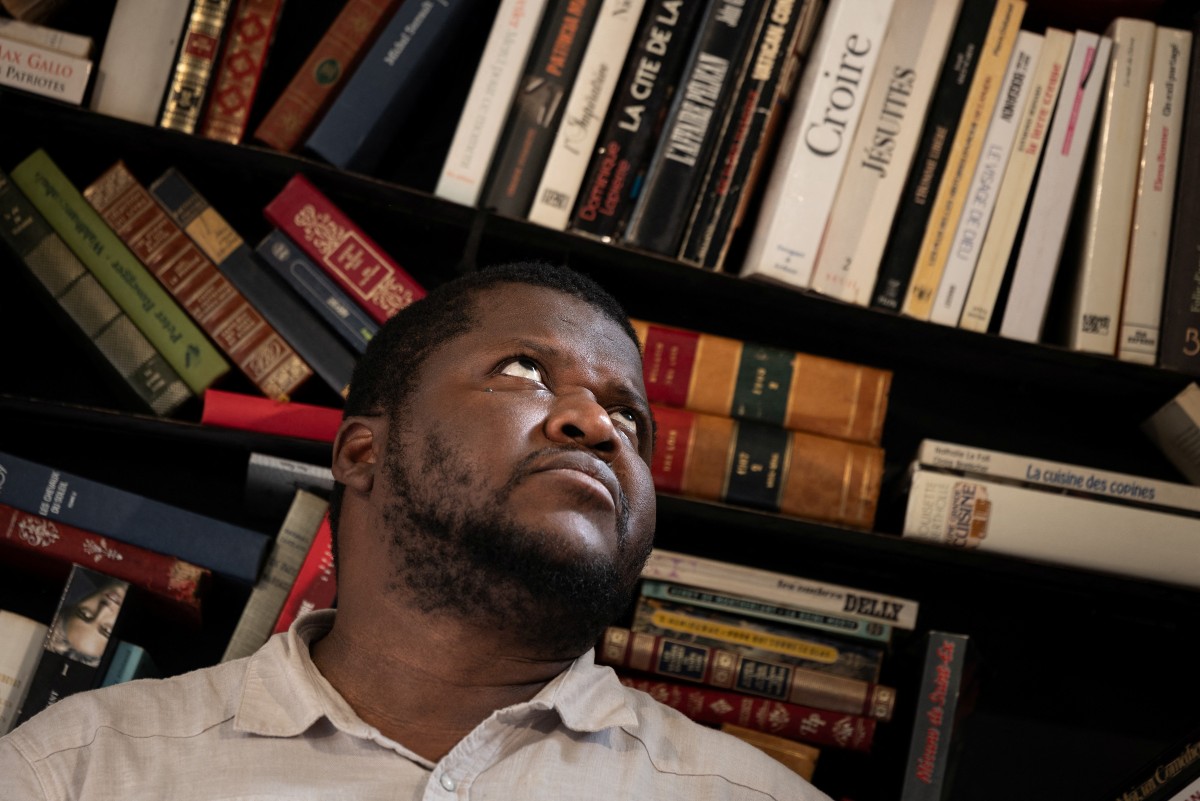
We are living through one of the darkest periods in literary history, a time when immigration is seen as a disease by some leaders around the world. It is in this context that the novel "C'était ça ou mourir," written by Thélyson Orélien, won the Fnac Novel Prize before being removed from the first selection for the Goncourt Prize by the Académie Goncourt due to an accusation of plagiarism.
In his novel, the author depicts the plight of migrants, particularly Haitians. Chantal Guy, in the newspaper "La Presse," passionately reports what he reads in this book: "A migrant crossing a border is like a snake slipping under a rug. It crawls, it trembles, it prays, it lies, and in the end, it either comes out alive or lies crushed under the sole of the world." This phrase alone is enough to stir the anger of those who advocate a system based on racism and hatred of migrants' progress.
So that no one is left unaware. This is not the first time a black person has been tormented by whiners. In 1968, Yambo Ouologuem, a Malian writer, published a book titled "Le Devoir de violence." His book received the Renaudot Prize but was accused of plagiarism after this award was given. History is a perpetual restart. The case of Thélyson Orélien confirms the facts. On September 25, 2026, a certain Samuel Fitoussia, claiming to be part of a collective project called "Balance ton Claude," accused the Haitian-Canadian author of having extensively used AI in writing his latest work.
For your information, it should be noted that the accuser Samuel Fitoussi is an essayist and columnist who published Woke Fiction in 2023 and Pourquoi les intellectuels se trompent in 2025 without winning any awards for his works. He claims to have acted out of concern for the future of writing in the face of AI and asserts that the theme of Orélien's novel did not motivate his actions.
Curiosity compels. Has anyone submitted the works of Thélyson's accuser to an AI test? Another question deserves our attention. What motivated this relatively unknown man to make such a serious accusation? There is no doubt that today, buzz constitutes a good means of becoming known through social media. I haven’t checked, but some say the accuser’s account is almost empty in terms of "followers." Was he seeking to exploit this affair to gain recognition, attract readers, and draw attention to himself, or was he acting out of jealousy? At this stage, nothing confirms what his motivations were.
Moreover, the attitude of the jury that awarded the prize raises serious concerns. First, why didn’t they check the content of Thélyson’s book before a final choice was made? Did they verify the texts of all the other contenders?
Why did they remove the book from the list only after being informed of an alleged plagiarism by a certain Fitousi? Who is he to overturn the jury's knowledge? Should we question the competence of the members or the mechanisms used to award the prizes? It is important to emphasize that to date, I do not have sufficient information to say that a thorough investigation was conducted to establish and restore the facts. For now, many questions remain unanswered.
Furthermore, the plagiarism accusations against writer Thélyson Orélien are far from being resolved. Some speak of a dubious past of the author, which remains to be verified. On the one hand, many people continue to purchase his book, and a significant number of them praise the quality of his work and the authenticity of certain facts and events recounted within. On the other hand, figures from the intellectual world raise their voices to question the true ability of AI to trace plagiarism when books and theses published long before it was born were considered texts where their authors committed the same faults as writer Thélyson.
Ultimately, if you haven’t yet read the work, you are urged to get it. Do not be fooled by any mythomaniac trying to present themselves as the peak of Mirandole. In the meantime, we need to ask who will play the role of arbiter between Thélyson and Samuel. Because if nothing is done, someone could go to bed, wake up the next day with their life turned upside down by the simple tweet of some random person. An ethics commission should be established to look into this matter because it is the future of all writers that is at stake.
